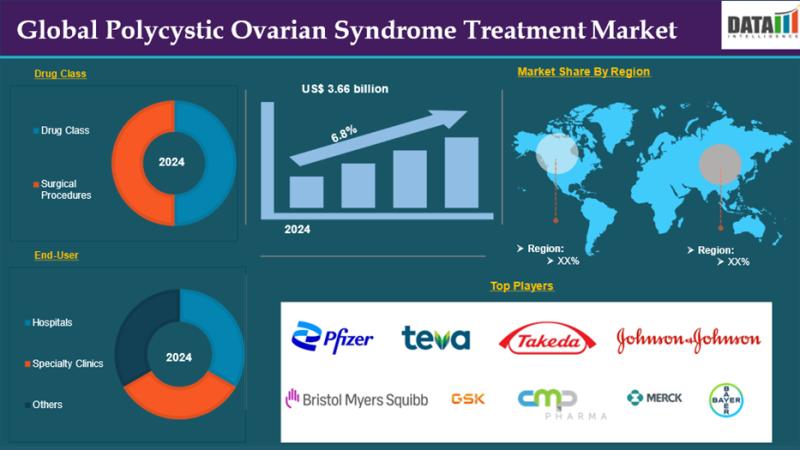
Rapid Growth in the PCOS Treatment Market
According to the latest market research report released by DataM Intelligence 4Market Research LLP, the Polycystic Ovarian Syndrome treatment market reached US$3.66 billion in 2024. It is projected to grow at a compound annual growth rate of 6.8% during the forecast period from 2025 to 2033, with the market size expected to reach US$6.39 billion by 2033.
Key Drivers of Market Growth
The significant growth of the PCOS treatment market is primarily driven by the following key factors:
- Rising Prevalence and Diagnosis Rates: Increasing incidence of hormonal disorders and lifestyle-related conditions, coupled with growing awareness and diagnosis of PCOS among women of reproductive age.
- Diversifying Treatment Needs: Growing demand for hormonal therapies, insulin-sensitizing drugs, fertility treatments, and lifestyle management solutions.
- Technological Advancements: Progress in personalized medicine, digital health platforms, and minimally invasive treatment approaches is enhancing patient outcomes.
- Increased Societal Focus: A growing global focus on women's health, early intervention, and long-term disease management, along with expanding healthcare access, is fueling market expansion.
Market Competitive Landscape
The report highlights that major global players in the PCOS treatment market include several prominent pharmaceutical companies, such as:
- Teva Pharmaceuticals USA, Inc.
- Bayer AG
- Johnson & Johnson
- Bristol-Myers Squibb Company
- Takeda Pharmaceutical Company Limited
- GSK plc.
- Pfizer Inc.
- Merck & Co., Inc.
- F. Hoffmann La Roche Ltd.
These leading pharmaceutical companies are significant forces driving market innovation and development.
Future Outlook
With the continued emphasis on women's health issues, ongoing innovation in medical technology, and increasing patient demand for high-quality treatment options, the PCOS treatment market is expected to maintain steady growth momentum in the coming years. This presents new opportunities and hope for healthcare professionals, research institutions, and patients in related fields.