Market Outlook and Growth Drivers
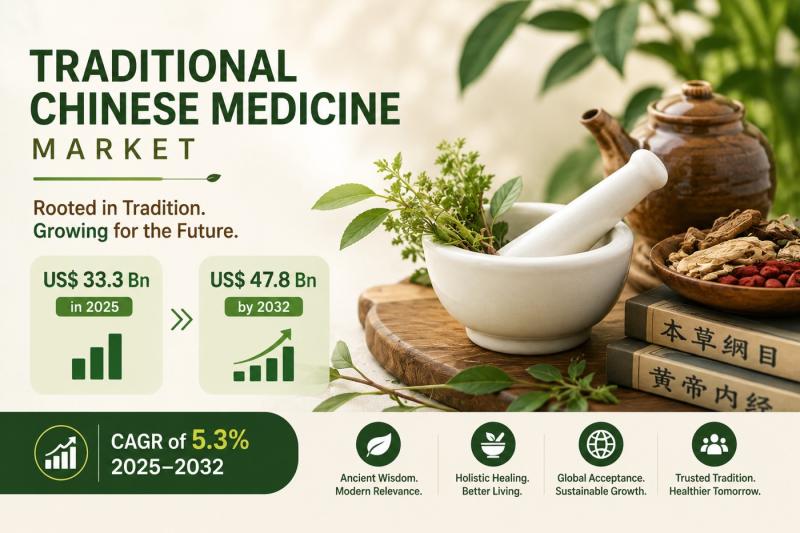
The global Traditional Chinese Medicine (TCM) market is experiencing remarkable expansion as consumers increasingly shift toward natural and holistic healthcare solutions. According to Persistence Market Research, the market is estimated to rise from US$ 33.3 Bn in 2025 to US$ 47.8 Bn by 2032, expanding at a CAGR of 5.3%. Growing awareness of herbal remedies, acupuncture therapies, medicinal plants, and preventive healthcare practices is creating strong demand across developed and emerging economies.
Key Market Highlights
- The TCM market is projected to grow from US$ 33.3 Bn in 2025 to US$ 47.8 Bn by 2032 at a CAGR of 5.3%.
- Rising consumer preference for natural and herbal healthcare products supports global market expansion.
- Herbal medicine formulations remain the leading product category due to widespread therapeutic applications.
- Asia Pacific dominates the market due to strong cultural adoption and established manufacturing ecosystems.
- Increasing integration of traditional medicine with modern healthcare practices drives commercial opportunities.
- Expanding research activities and pharmaceutical investments strengthen innovation across TCM products.
Product Categories and Consumer Channels
The TCM market is segmented by product type, application, and distribution channel. Categories include herbal medicines, acupuncture products, cupping therapies, moxibustion products, and dietary supplements. Herbal medicines account for a substantial share due to growing consumer acceptance for chronic disease management, immunity enhancement, digestive health, and stress management. Acupuncture therapies are gaining popularity in pain management and rehabilitation.
Based on end users, the market includes hospitals, specialty clinics, wellness centers, and homecare consumers. Hospitals and specialty clinics increasingly adopt TCM alongside modern methods to improve patient outcomes. Wellness centers see rising demand for acupuncture, herbal therapies, and preventive treatments. Online and retail distribution channels enhance product accessibility as herbal supplements gain popularity among younger demographics.
Regional Markets: Asia Pacific Leads, Europe and North America Follow
Asia Pacific maintains its dominant position due to the deep-rooted history of herbal medicine and traditional healthcare practices in China, Japan, and neighboring countries. China serves as the primary manufacturing and consumption hub, supported by strong government backing, established pharmaceutical infrastructure, and increasing R&D investment. North America and Europe are witnessing growing adoption of TCM as consumers seek natural and preventive healthcare alternatives. Healthcare professionals are exploring integrative models that combine traditional and modern practices.
Market Drivers
The increasing global demand for natural healthcare solutions is a major growth driver. Consumers are becoming more aware of potential side effects of synthetic pharmaceuticals and actively seeking plant-based alternatives. Herbal medicines, acupuncture, and wellness therapies are preferred for chronic disease management, stress reduction, pain relief, and immunity enhancement. Rising healthcare expenditures, investments in herbal pharmaceutical manufacturing, and the growth of digital health platforms and e-commerce further propel market growth.
Challenges and Restraints
Despite strong potential, regulatory complexities and quality standardization challenges restrain market growth. Variations in product quality, inconsistent regulatory frameworks, and limited scientific validation for certain formulations create barriers to global commercialization. Many countries maintain strict approval processes for herbal medicines, potentially delaying product launches. Concerns regarding product authenticity and raw material sourcing also persist, along with issues like counterfeit products and supply chain transparency. Some healthcare professionals remain cautious about the efficacy and safety of certain traditional therapies due to insufficient clinical evidence.