What is Cancer Gene Therapy?
Cancer gene therapy is a cutting-edge approach that uses genetic engineering to treat cancer. It works by modifying the patient's own genes or introducing specific genes to correct cancer-causing mutations or enhance the immune system's ability to recognize and destroy cancer cells.
Why is the Market Growing So Fast?
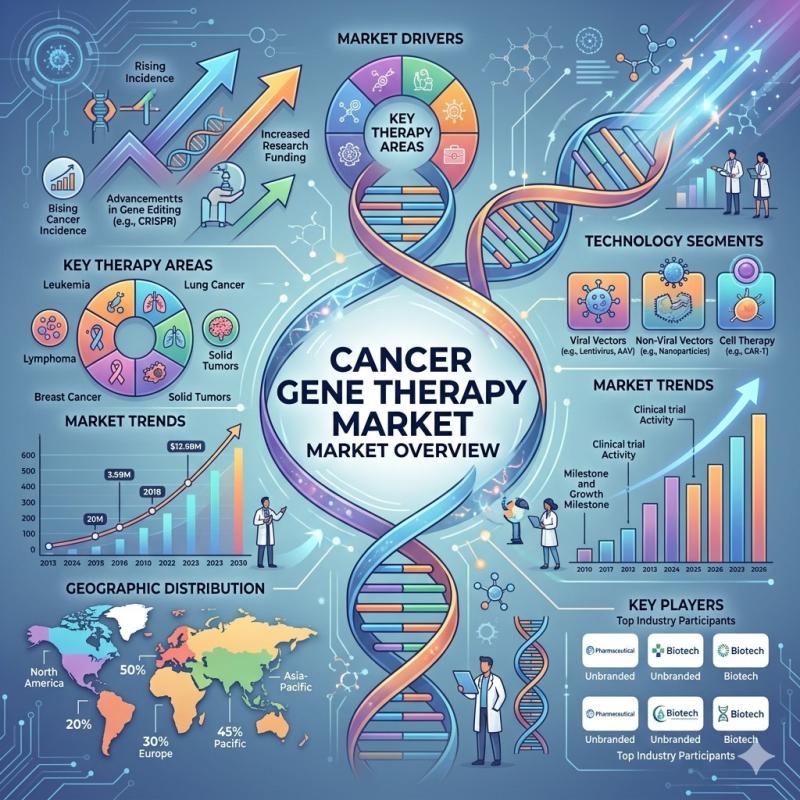
According to a report by DataM Intelligence, the global cancer gene therapy market reached approximately US$3.97 billion in 2024 and is projected to soar to US$19.97 billion by 2033, growing at a compound annual growth rate (CAGR) of 19.8%. Key drivers include:
- Rising cancer incidence driven by an aging global population.
- Integration of precision medicine and artificial intelligence, enabling faster identification of genetic mutations.
- Breakthroughs in gene editing technologies such as CRISPR and CAR-T cell therapy.
- Streamlined regulatory pathways accelerating the approval of new treatments.
Major Milestones
- March 2026: Novartis announced expansion of its cell and gene therapy manufacturing facility in the U.S.
- February 2026: Kite Pharma (Gilead) reported positive Phase III results for next-generation CAR-T therapy.
- January 2026: Bristol Myers Squibb entered a collaboration to develop AI-driven gene therapy platforms.
- December 2025: Bluebird Bio received European regulatory clearance for a gene therapy targeting rare cancers.
- November 2025: CRISPR Therapeutics announced progress in clinical trials for CRISPR-based cancer therapies.
Treatment Areas
Cancer gene therapies are primarily segmented into:
- Hematological malignancies (e.g., leukemia, lymphoma): where CAR-T therapies have seen the greatest success.
- Solid tumors (e.g., lung cancer): a challenging but rapidly growing area of focus.
Challenges and the Road Ahead
Despite its promise, cancer gene therapy faces hurdles including high costs, complex manufacturing, and the need for specialized medical centers. However, advances in AI and diagnostics are improving patient selection and outcomes. Value-based pricing models and more efficient manufacturing will be key to broadening access to these lifesaving treatments.