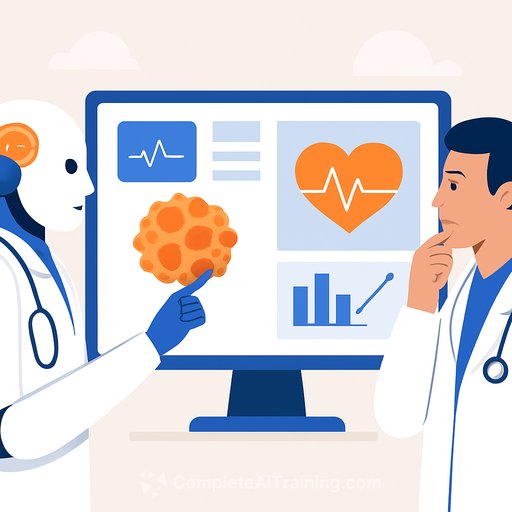
AI Breakthroughs in Medical Detection
A recent study found that artificial intelligence can match top medical experts in detecting certain types of cancer and heart disease. For instance, AI imaging systems can quickly identify subtle abnormalities in mammograms and echocardiograms, sometimes catching early cancer signals that human doctors might overlook.
The Strengths of AI: Speed and Consistency
AI can work 24/7 without fatigue or distraction. Research shows that AI models maintain highly consistent judgment criteria when processing massive medical images, reducing the risk of misdiagnosis due to differences in individual expertise. This is particularly beneficial for regions with limited healthcare resources.
Irreplaceable Human Judgment
Despite AI's remarkable potential, experts agree that medical decisions should not rely solely on algorithms. Human doctors can synthesize a patient's symptoms, history, lifestyle, and emotional state for a more comprehensive diagnosis. Additionally, doctors communicate with patients, explain conditions, and navigate ethical dilemmas—tasks that AI struggles to handle.
The Future of AI-Doctor Collaboration
Currently, most medical AI is designed as an assistant. For example, AI can pre-mark suspicious areas to help doctors screen cases faster, but the final diagnosis still requires confirmation by a physician. In treatment planning, surgical decisions, and chronic disease management, AI-doctor collaboration is gradually maturing. Experts predict a new era of 'human-machine synergy' where AI handles data analysis and pattern recognition, while doctors focus on humanistic care and clinical reasoning.
Summary
The progress of AI in medicine is encouraging, but it is not meant to replace doctors—rather, it empowers them. As technology advances, maintaining respect for human judgment remains the core of a healthy healthcare system.