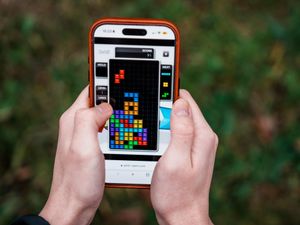
A New Gaming Therapy: Using Tetris to Combat Traumatic Memories
A new study published in a leading journal reveals a surprising intervention for trauma: playing the classic game Tetris. This trial, a collaboration between researchers in the UK and Sweden, offers a novel approach to addressing Post-Traumatic Stress Disorder (PTSD).
How Was the Study Conducted?
The trial recruited 99 UK National Health Service (NHS) staff who had been exposed to traumatic events (such as witnessing deaths) during their work in the COVID-19 pandemic. Researchers divided them into two groups:
- Intervention Group (40 people): Received a treatment called Imagery Competing Task Intervention (ICTI). The specific method involved briefly recalling a traumatic memory fragment, then immediately playing a slowed-down version of Tetris.
- Control Group: Did not receive this intervention.
The Striking Results
Researchers found that compared to the control group, healthcare workers who received the Tetris intervention reported a significant reduction in the number of trauma-related intrusive memories (commonly known as "flashbacks") in the following week. These flashbacks are a core symptom of PTSD, involuntarily intruding into consciousness and causing intense distress.
The Science Behind It
This method is based on the theory of "cognitive interference." The brain's working memory, which processes visual-spatial information, has limited capacity. When a person recalls a traumatic scene (a powerful visual image), it occupies these working memory resources. Immediately playing a game like Tetris, which requires intense focus on visual-spatial manipulation, competitively engages the same pool of working memory resources.
This "competition" is thought to disrupt or weaken the reconsolidation process of the traumatic memory. As a result, the memory may be stored again in a less vivid and less intrusive form, reducing its potential to trigger future flashbacks.
Future Prospects
Researchers are excited about the potential of this method, describing it as "accessible, scalable and adaptable." It requires no complex equipment—just a smartphone or tablet and a simple game—making it low-cost and easy to disseminate. The team hopes to conduct larger trials with more diverse populations to verify its long-term effects and general applicability.
Important Note: This research demonstrates a promising auxiliary intervention but is not a replacement for professional psychotherapy. If you or someone you know is struggling with symptoms of PTSD, it is essential to seek diagnosis and help from a qualified mental health professional.