Why is egg freezing becoming so popular?
Fertility rates in the United States are near historic lows, partly due to a sharp decline in women having babies in their 20s over the last three decades. Yet women's biology remains unchanged—fertility declines with age. Egg freezing offers a new solution to this seemingly unsolvable problem.
As we first reported last year, freezing embryos for IVF has been possible for decades, but freezing unfertilized eggs was a tougher scientific challenge. Initially used for cancer patients and others with fertility-threatening conditions, egg freezing for non-medical reasons became accepted 13 years ago. Since then, demand has skyrocketed, with hundreds of thousands of eggs now frozen, raising big money, big hopes, and big questions.
What is the process?
Egg retrieval is the culmination of an arduous process: nearly two weeks of daily self-administered hormone injections, sometimes several a day, to ripen multiple follicles. A surgeon then uses a tiny needle to drain the fluid, which is examined in an embryology lab to isolate the eggs.
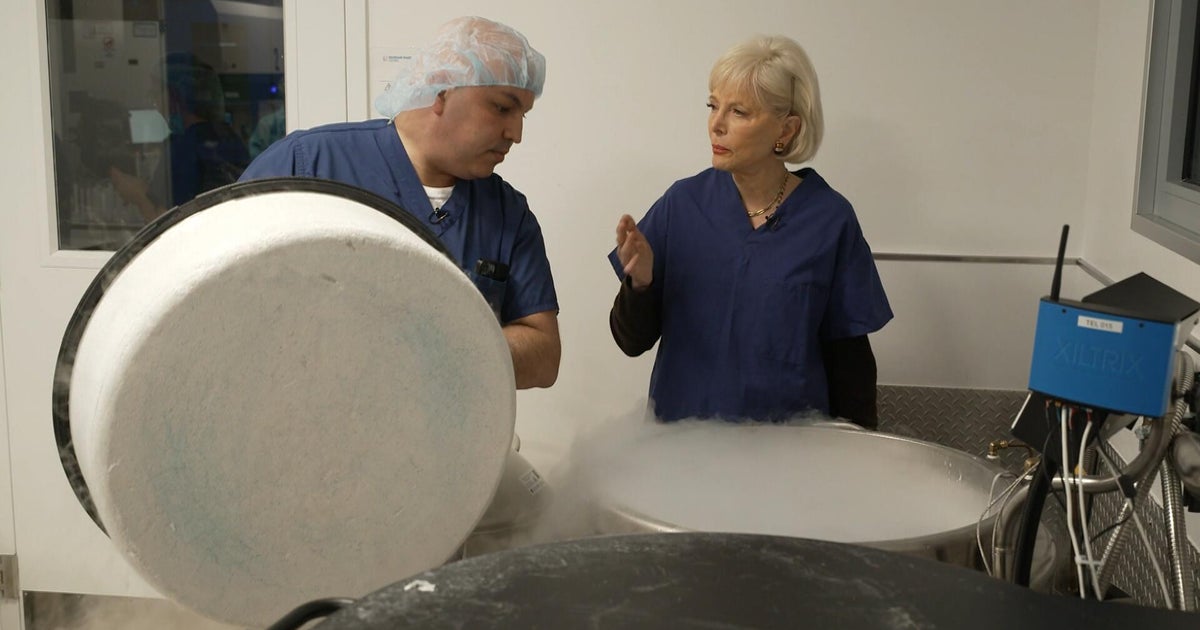
- The eggs are placed on tiny straws, plunged into liquid nitrogen, and stored at -320°F (-196°C) for years.
- When ready, they are thawed, combined with sperm to create embryos—the second half of IVF.
- Data so far shows no differences in the health of babies born from frozen eggs compared to IVF.
Why do women choose egg freezing?
Several women shared their stories. Yasmine Higbee, 30, said: 'I 100% know I want children. Freezing my eggs allows me to enjoy time with my partner without rushing. The biological clock is ticking, but I'm not ready yet.' Nameetha Jacob, 38, added: 'It’s insurance. I know I’ll be an older mother. It takes the stress out of dating—no pressure to find someone and settle down. I don’t hear the ticking anymore.'
The science: How does egg freezing pause the biological clock?
Dr. Lucky Sekhon from RMA of New York explains: 'We are born with all the eggs we will ever have, and we don't make new ones. The number decreases from the start.' She adds: 'When you freeze an egg at age 28, that egg remains 28 years old until you thaw it. It's incredible.' Not only does the quantity decline with age, but quality also decreases. Even at peak fertility in a woman's 20s, about 25% of eggs create chromosomally abnormal embryos when combined with sperm.
Egg freezing is hailed as 'as revolutionary as the pill.' As Dr. Tomer Singer says: 'The pill gave women the choice of who to be with. Egg freezing takes it further: you don't have to have a baby at 30 or 35. You can delay fertility into your 40s, having children with your own eggs frozen in your 20s and 30s.'