Enneagram Dynamic Snapshot
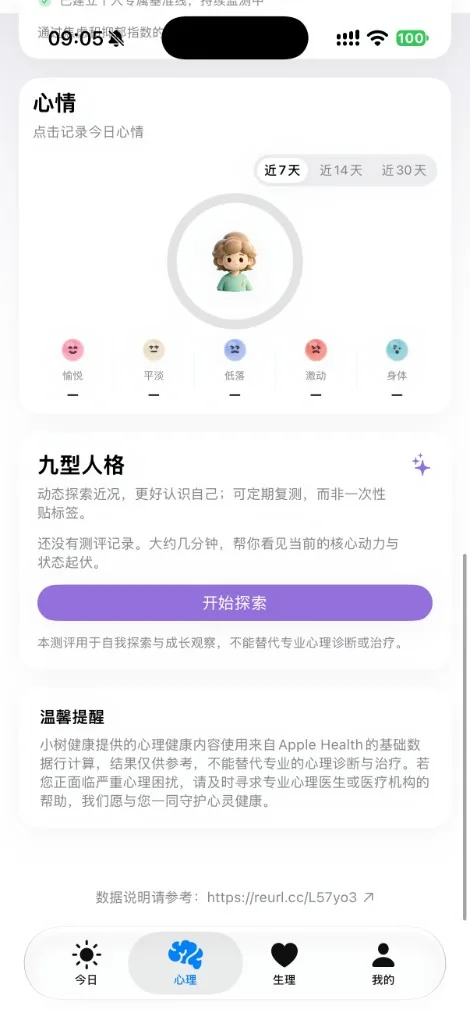
See who you are right now—not a fixed label. Adaptive questions, fused with stress, HRV, sleep, and mood, to read your recent drivers and state.

See who you are right now—not a fixed label. Adaptive questions, fused with stress, HRV, sleep, and mood, to read your recent drivers and state.
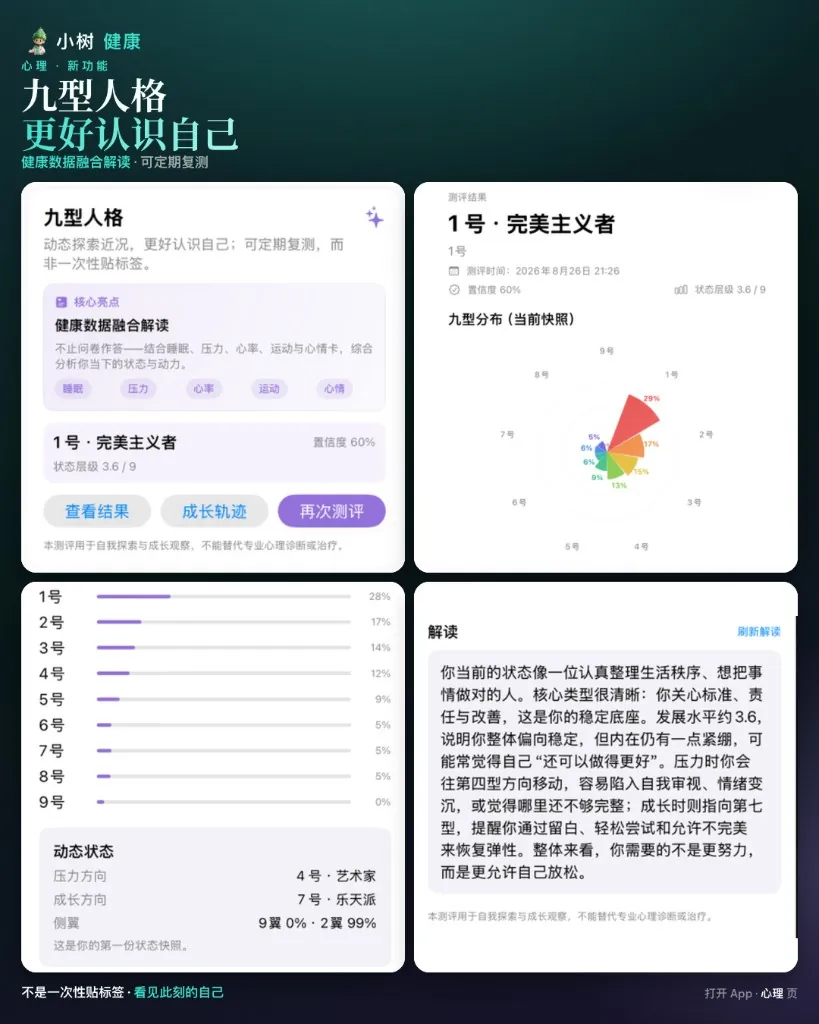
A map of inner motivation—not a behavior checklist, and not a diagnosis
From Type 1 (Reformer) to Type 9 (Peacemaker), the Enneagram asks what you fear, desire, and automatically do under pressure—not whether you are extraverted.
The main type is relatively stable. Adjacent wings soften the picture. Stress and growth directions show where the same person leans when tight or at ease.
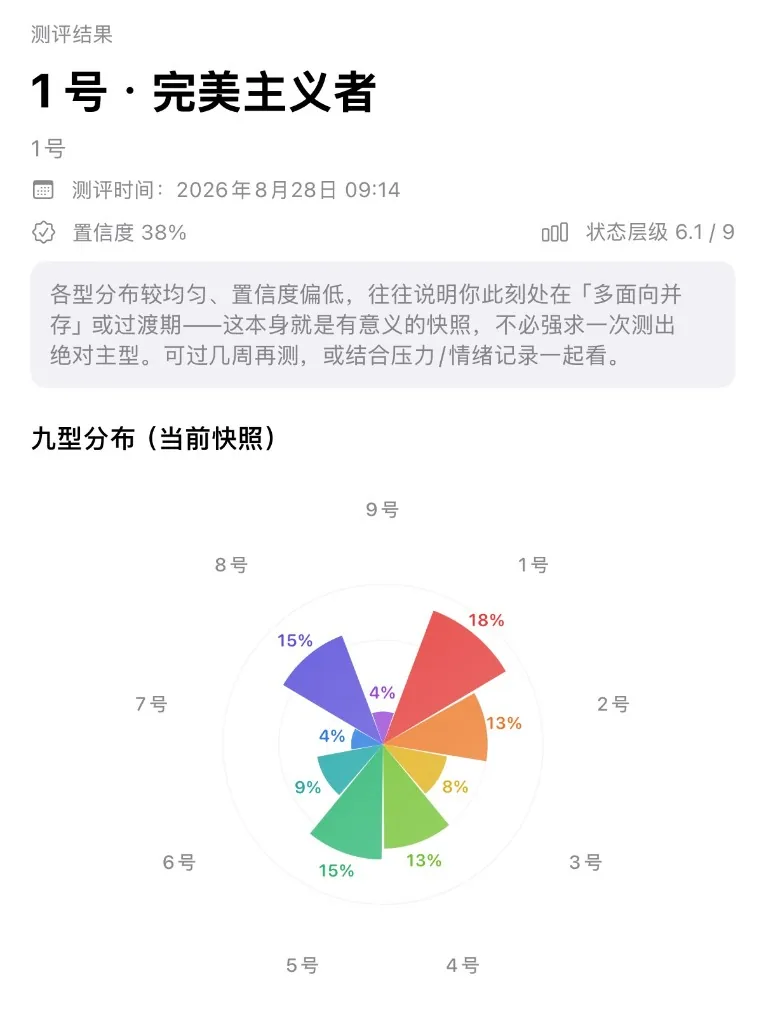
Each run is a snapshot. An even spread and low confidence often mean a multifaceted or transitional period—not a failed test.
About 48–55 questions, 5–12 minutes, dynamically adjusted by discrimination. You can save and exit anytime.
A nine-type distribution, confidence, and dynamic state—not a single number
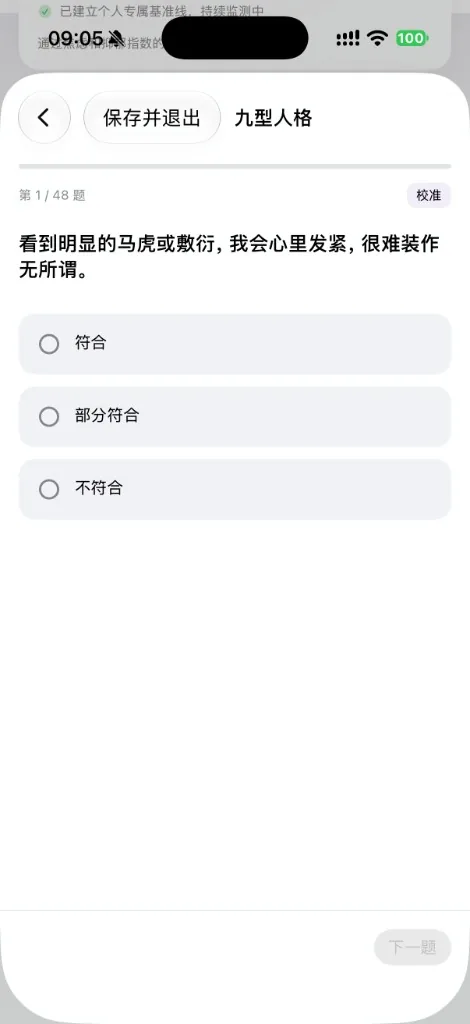
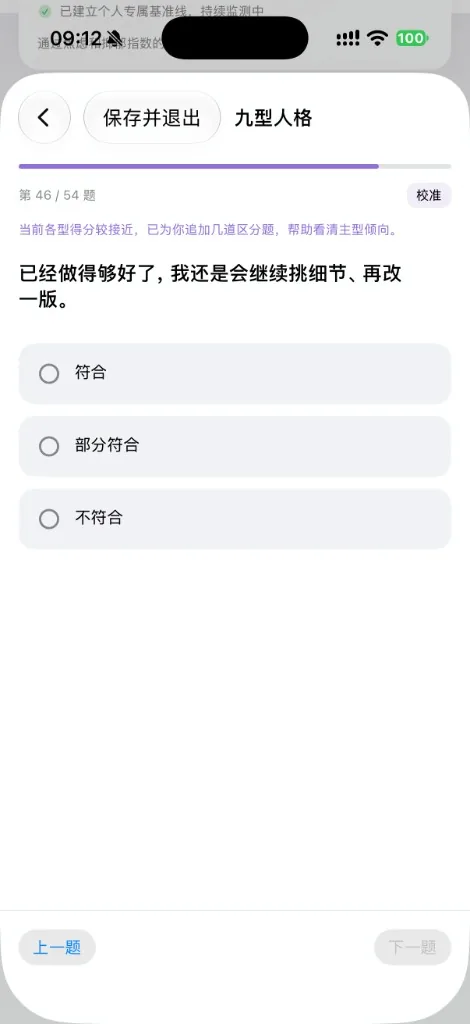
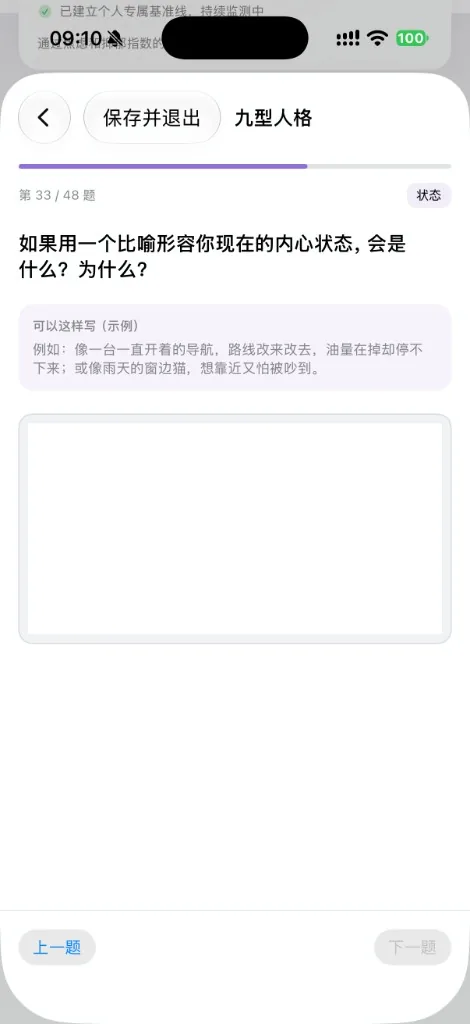
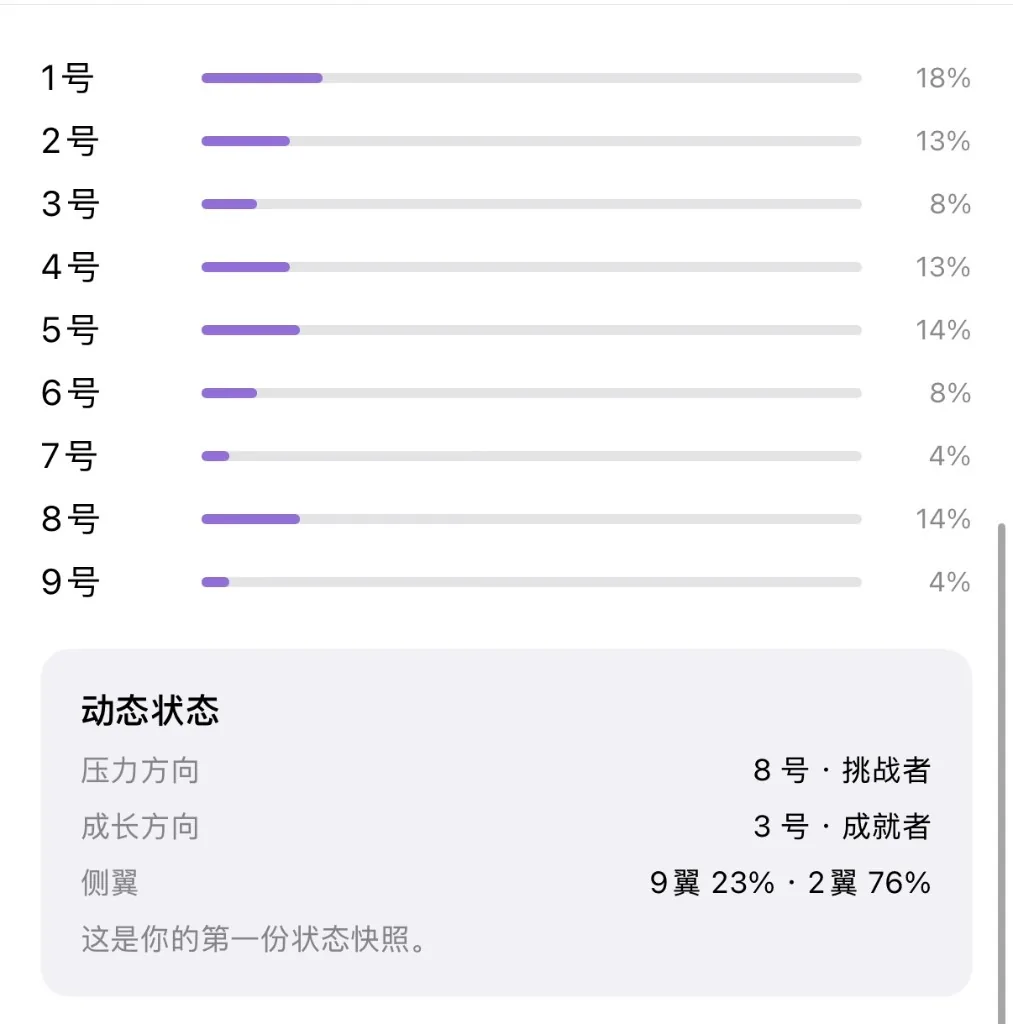
Not a fixed quiz plus a generic blurb. Extra items appear when types are close. Open answers are read for imagery and emotion.
The same snapshot can be reread after new stress, mood, or sleep records—without forcing a full retest.
Personal baseline, stress/anxiety index, HRV, heart rate, sleep, and mood check whether your body agrees with the questionnaire.
When self-report and physiology disagree, the reading names a fluctuation and suggests retesting in a few weeks.
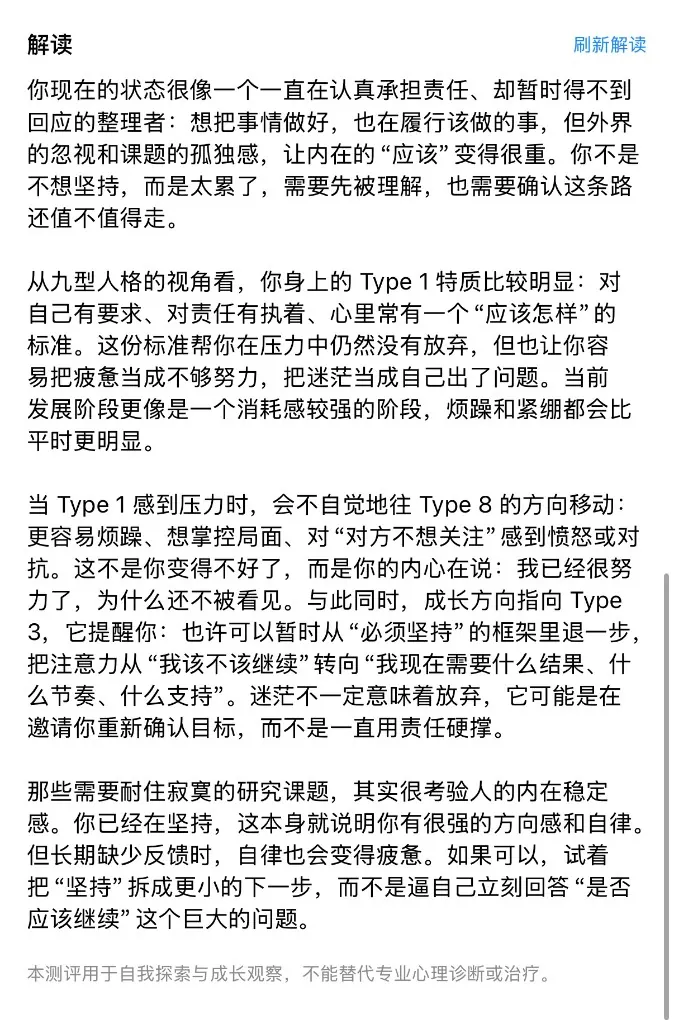
Open Treelet Health → Mental → Enneagram. For self-exploration only—not a clinical diagnosis.
This assessment is for self-exploration and growth observation. It cannot replace professional psychological diagnosis or treatment. Baseline metrics come from Apple Health.

Scan to download